Oh Hey 1st Grade: A Practical Guide to Whimsical Embroidery Designs
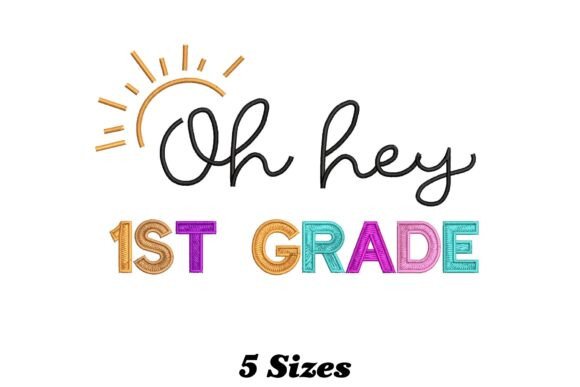
The transition into first grade is a significant milestone for children, often marked by a desire for personalized items that celebrate their new status as "big kids." For crafters and parents alike, the Oh Hey 1st Grade machine embroidery design offers a specific aesthetic solution to this need. Unlike generic text-based designs, this pattern combines playful typography with a whimsical charm that resonates well with the developmental stage of six and seven-year-olds. When evaluating digital assets for textile customization, understanding the distinct characteristics, technical requirements, and comparative value of such designs is essential for making an informed purchase.
Defining the Aesthetic and Utility of Oh Hey 1st Grade
The Oh Hey 1st Grade design distinguishes itself through its approachable visual language. In the realm of machine embroidery, designs often fall into rigid categories: formal script, bold block letters, or intricate pictorial scenes. This particular design occupies a middle ground, utilizing rounded, friendly letterforms that are legible yet expressive. The "charm" mentioned in product descriptions is not merely marketing speak; it refers to the specific stroke weights and spacing that prevent the design from appearing too childish for older siblings or too mature for kindergarteners.
From a utility standpoint, the design is engineered for versatility. It is not restricted to a single fabric type or garment style. The digitization typically includes balanced stitch density, allowing it to sit comfortably on the heavier weave of a towel without puckering, while remaining delicate enough for a lightweight cotton t-shirt. This adaptability makes it a strong candidate for a wide range of home decor projects, including pillowcases, aprons, and tote bags. The ability to scale the design without losing definition is a critical factor for users who work with varying hoop sizes and machine capabilities.
Comparing Formats and Technical Compatibility
One of the primary decision factors when selecting a digital embroidery file is format compatibility. The Oh Hey 1st Grade package typically arrives with multiple file formats, addressing a common pain point in the crafting community. Embroidery machines vary significantly in their proprietary requirements; a Brother user cannot natively read a Tajima file, and a Bernina requires different data than a Janome. By providing a multi-format bundle, the design eliminates the need for third-party conversion software, which can sometimes introduce errors or alter stitch paths.
When comparing this approach to single-format alternatives, the tradeoff is usually price versus convenience. Single-format files may be slightly cheaper, but the cost of purchasing or subscribing to conversion software often outweighs those savings over time. Furthermore, conversion tools can struggle with complex underlay stitches or color changes, potentially ruining the integrity of the design. A pre-converted, multi-format download ensures that the stitch count, pull compensation, and jump stitches remain exactly as the designer intended. For hobbyists who own older machines or switch between brands, this technical robustness is a significant advantage.
Evaluating Stitch Density and Fabric Suitability
A critical aspect of any embroidery design is how it interacts with different substrates. The Oh Hey 1st Grade pattern is generally designed with a moderate stitch count, avoiding the extremes of overly dense fills that cause fabric distortion or sparse outlines that look unfinished. This balance is particularly important when working with knit fabrics like t-shirts. High-density designs on knits can create a "taco effect," where the fabric curls around the stiff embroidery. Conversely, very light designs may not hold up well after repeated washing.
In comparison to highly detailed pictorial designs, which often require stabilizers and precise tension settings, the text-focused nature of this design simplifies the stitching process. It is less prone to registration issues, where colors do not align perfectly, because the elements are fewer and more distinct. However, users should still consider the weight of their chosen fabric. While the design works well on towels, placing it on a very thin linen might require a tear-away stabilizer to prevent show-through on the reverse side. Understanding these material interactions helps determine if this specific design fits a particular project's needs better than a more complex alternative.
Strengths and Tradeoffs in Project Planning
The strengths of the Oh Hey 1st Grade design lie in its broad appeal and ease of execution. It serves as an excellent entry point for beginners who want a professional-looking result without navigating complex color palettes or intricate fill patterns. The clear separation of colors allows for quick thread changes, reducing the time spent at the machine. Additionally, the whimsical nature of the font makes it suitable for gift-giving scenarios where personalization is key, such as teacher appreciation gifts or back-to-school parties.
However, there are tradeoffs to consider. Because the design relies heavily on typography, it may lack the visual impact of a full-illustration design for users seeking a more graphic statement. If a project requires a large, dominant image rather than a label-like accent, this design might feel too small or simple. Furthermore, while the multi-format availability is a strength, it does increase the initial file size, which could be a minor inconvenience for users with limited storage on USB drives or slow internet connections during download.
Another consideration is the longevity of the trend. Text-based designs tend to have a longer shelf life than character-specific trends. While a design featuring a specific cartoon character may become obsolete quickly, the phrase "Oh Hey 1st Grade" remains relevant annually. This makes it a more sustainable resource for crafters who wish to build a library of reusable assets. Comparing this to seasonal or pop-culture-themed designs, the investment here yields a higher return over multiple years.
Determining the Best Fit for Your Needs
Deciding whether Oh Hey 1st Grade is the right choice depends largely on the scope of your current projects. It is an ideal fit for individuals creating custom apparel for school events, family reunions, or birthday celebrations where a cohesive theme is desired. The design's flexibility allows it to be combined with other simple motifs, such as pencils, apples, or stars, to create a larger composition. For those looking to sell finished goods, the design's broad demographic appeal makes it a low-risk inventory item.
Conversely, this design may not be the best option for users seeking industrial-grade durability or high-fashion aesthetics. If the goal is to embroider on heavy denim or leather, a design with denser underlays and stronger anchor stitches would be preferable. Similarly, if the target audience is teenagers or adults, the playful tone of this specific design might not align with the desired brand image. In such cases, exploring more minimalist or sophisticated typography styles would be a more strategic direction.
Ultimately, the value of the Oh Hey 1st Grade embroidery design lies in its balance of charm and functionality. It addresses the specific need for age-appropriate personalization while offering the technical reliability required for successful machine embroidery. By weighing the format compatibility, stitch density, and aesthetic versatility against your specific project requirements, you can determine if this resource aligns with your creative goals. Whether used for a one-off family keepsake or a small business venture, understanding these nuances ensures that the final stitched product meets expectations for quality and appeal.