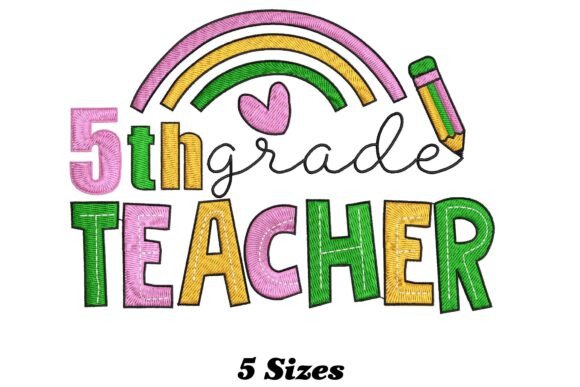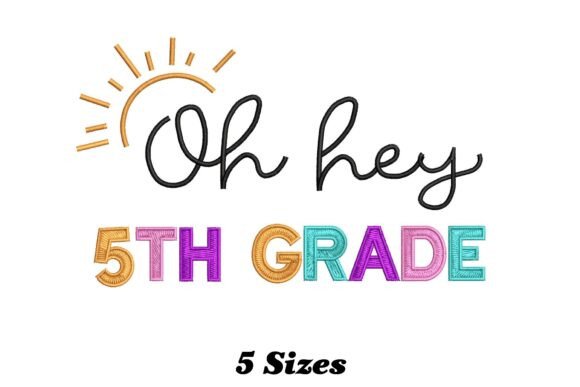
Celebrating the Delightful 5th Grade Teacher with Whimsical Embroidery
The fifth-grade classroom is a unique ecosystem in the educational landscape. It serves as a pivotal bridge between the elementary years and the more independent middle school experience. Within this environment, the Delightful 5th Grade Teacher plays a crucial role, acting not just as an instructor but as a mentor, a guide, and often a source of joy for students navigating their pre-adolescent years. For those who wish to honor these educators or celebrate this specific stage of learning, there are few mediums as personal and enduring as textile art. A playful embroidery design featuring the theme of a delightful teacher brings a tangible charm to fabrics, transforming ordinary items into meaningful keepsakes.
This approach to customization goes beyond simple text printing. Machine embroidery offers texture, depth, and a handcrafted feel that resonates deeply with recipients. Whether you are a parent looking for a retirement gift, a student organization planning an appreciation event, or a small business owner expanding your product line, understanding how to utilize these designs effectively can elevate the impact of your gesture. The versatility of such a design allows it to be stitched onto t-shirts, towels, home decor, and various other items that could benefit from a fun, whimsical touch.
The Art of Textile Storytelling in Education
Textiles have long been used to communicate identity, affiliation, and sentiment. In the context of education, embroidered patches and motifs serve as badges of honor. When we consider the archetype of the Delightful 5th Grade Teacher, we are thinking of someone who infuses lessons with creativity, patience, and humor. An embroidery design that captures this spirit does more than label a garment; it tells a story about the atmosphere of the classroom.
Unlike screen printing, which sits flat on the surface of the fabric, embroidery adds a three-dimensional quality. The raised stitches catch the light differently, creating a dynamic visual interest that changes as the item moves. This tactile element is particularly significant when the design includes playful elements like smiling faces, floating books, or whimsical stars—common motifs associated with a joyful learning environment. The physical presence of the thread on the fabric mimics the "hands-on" nature of teaching, reinforcing the idea that education is a craft built stitch by stitch, lesson by lesson.
Selecting the Right Fabric for Maximum Impact
The success of any embroidery project relies heavily on the foundation: the fabric itself. When applying a design intended to bring charm to your fabrics, the choice of material dictates the final look and durability. For apparel, such as t-shirts worn by teachers or students, a medium-weight cotton or a cotton-polyester blend is often ideal. These materials provide enough stability to hold the intricate details of a playful design without puckering, while remaining soft against the skin.
For home decor applications, the possibilities expand significantly. Towels, specifically bath towels or kitchen hand towels, offer a textured canvas that complements the raised stitches of embroidery beautifully. Imagine a set of guest towels in a classroom party room or a teacher's lounge adorned with a whimsical motif celebrating the fifth-grade experience. The absorbency of the towel combined with the decorative stitching creates a functional piece of art. Similarly, throw pillows, tote bags, and even aprons can serve as excellent canvases. An apron, for instance, is a practical tool for teachers who engage in science experiments or art projects, making it a perfect vessel for a design that celebrates the joy of discovery.
Technical Considerations for Machine Embroidery
While the aesthetic appeal of a Delightful 5th Grade Teacher design is paramount, the technical execution is what ensures longevity and professional quality. One of the most significant advantages of modern digital embroidery patterns is the availability of multiple file formats. This compatibility is essential for a broad audience ranging from hobbyists with home machines to professionals running commercial hoop systems.
Embroidery machines read specific digital instructions to guide the needle and thread. Common formats include .PES (Brother), .JEF (Janome), .DST (Tajima), and .EXP (Singer/Bernina). A high-quality design package will include several of these formats, ensuring that the user can load the pattern regardless of their specific hardware. This flexibility removes barriers to entry, allowing anyone with access to a machine to create professional-grade results. However, simply having the correct file is only the first step.
Stabilization and Hooping Techniques
To achieve the crisp lines and vibrant colors necessary for a whimsical design, proper stabilization is non-negotiable. Stabilizers act as a temporary support structure for the fabric during the stitching process. Without them, the fabric can shift, stretch, or pucker, ruining the integrity of the design. For lightweight t-shirts, a tear-away stabilizer is often sufficient. It provides support during stitching and is easily removed afterward, leaving the fabric soft.
Conversely, for items like towels or thick fleece blankets, a cut-away stabilizer might be required. These remain permanently bonded to the back of the fabric, providing ongoing support for the heavy density of stitches often found in detailed designs. The hooping technique also plays a critical role. The fabric must be taut within the hoop, resembling a drumhead. If the fabric is loose, the needle may drag it out of alignment, causing misregistration of colors or gaps in the stitching. Proper tension ensures that the playful elements of the design, such as curved lines or fine details, render exactly as intended.
Applications Beyond the Classroom
While the primary inspiration for this design stems from the educational sector, its utility extends far beyond the school gates. The concept of bringing a bit of charm to your fabrics with a playful design is universally appealing. Business owners in the custom apparel industry can leverage these designs to create niche products for teacher appreciation weeks, back-to-school sales, or graduation parties. The emotional connection parents and communities have with their children's teachers makes these items highly marketable.
In the realm of home decor, the whimsical nature of the design can soften the aesthetic of a child's bedroom or a family living space. A pillowcase featuring a nod to the Delightful 5th Grade Teacher can serve as a comforting reminder of a favorite mentor or a cherished year in a child's life. Furthermore, these designs can be adapted for corporate gifting within educational organizations. School districts often seek unique ways to recognize veteran staff or new hires, and a customized embroidered item stands out among the typical mugs and plaques.
Hobbyists and crafters also find immense value in these multi-format files. They can experiment with different thread colors to personalize the design for specific individuals. Perhaps one teacher loves bright yellow, while another prefers calming blues. The ability to swap thread colors while maintaining the structural integrity of the design allows for infinite customization. This level of personalization transforms a generic template into a bespoke tribute, adding significant sentimental value to the finished product.
Integrating Design into Daily Workflows
For those managing a workflow involving multiple orders or large batches, efficiency is key. The availability of compatible file formats streamlines the production process. Instead of converting files manually or risking errors in translation, users can immediately load the appropriate format for their machine. This reduces downtime and increases throughput, which is vital for small businesses operating on tight deadlines.
Furthermore, understanding the characteristics of the design allows for better planning of thread consumption and stitch counts. A playful, whimsical design often involves varied stitch types, including satin stitches for outlines and fill stitches for larger areas. Knowing the stitch count helps in estimating the time required for production and calculating the cost per unit accurately. This data-driven approach ensures that the creative endeavor remains financially viable, whether it is a one-off gift or a commercial product line.
The Enduring Value of Handcrafted Details
In an era dominated by mass-produced goods, there is a growing appreciation for items that exhibit care and craftsmanship. Embroidery represents a return to traditional techniques, updated with modern technology. When a recipient receives a t-shirt or a towel adorned with a Delightful 5th Grade Teacher motif, they are receiving something that feels special and intentional. The slight variations in thread sheen and the texture of the stitches remind the viewer that human effort was involved in its creation.
This perception of value is particularly potent in the context of gratitude. Teachers often receive numerous gifts, many of which are disposable or quickly forgotten. An embroidered item, however, is durable and designed to last through washes and wear. It becomes a part of the teacher's daily routine, a constant visual reminder of the appreciation they inspire. Over time, the fabric may soften and fade slightly, but the embroidered design retains its vibrancy, serving as a lasting testament to the bond between educator and community.
Ultimately, the decision to use a playful embroidery design is a decision to prioritize quality and emotion over convenience. It acknowledges that the people we wish to honor deserve something that reflects their unique impact. By selecting a design that captures the whimsy and joy of the fifth-grade experience, and by executing it with attention to technical detail, creators can produce items that truly resonate. Whether for personal use or commercial application, the fusion of a charming concept with skilled execution results in a product that is both beautiful and meaningful.