7th Grade Teacher: A Playful Embroidery Design for Personalized Projects
The role of a 7th grade teacher is often one of the most dynamic in the educational landscape, bridging the gap between elementary innocence and high school independence. For those looking to celebrate this specific milestone or profession, the 7th Grade Teacher machine embroidery design offers a unique way to honor that dedication through tangible craft. This playful embroidery design is not merely a decorative element; it is a functional asset within a broader creative workflow, allowing educators, gift-givers, and small business owners to add a layer of personal charm to fabrics ranging from t-shirts to home decor.
Integrating digital assets like this embroidery pattern into a production process requires an understanding of both the technical specifications and the aesthetic application. Whether you are a professional embroiderer fulfilling custom orders or a hobbyist creating a keepsake, the versatility of this design ensures it fits seamlessly into various project timelines. The following guide explores how to effectively utilize the 7th Grade Teacher design, manage file compatibility, and execute high-quality stitching that stands the test of time.
Understanding the Design and Its Creative Application
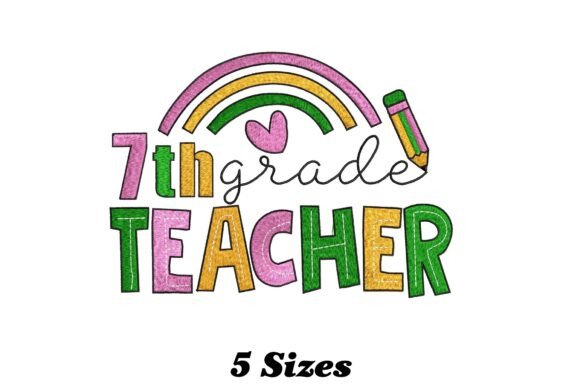
The 7th Grade Teacher design is characterized by its whimsical typography and engaging visual elements, making it ideal for items that require a touch of personality. In the context of fabric arts, this design serves as a focal point that can transform a plain garment or household item into a statement piece. Unlike generic text-only patterns, this design incorporates stylistic flourishes that capture the spirit of middle school education—fun, energetic, and supportive.
When planning a project, consider where this design fits within your inventory or gifting strategy. For small business owners operating in the educator niche, this pattern represents a seasonal opportunity. As the school year approaches, demand for teacher appreciation gifts spikes. Having the 7th Grade Teacher design ready in your library allows for rapid turnaround times on custom orders. It eliminates the need for last-minute sourcing, enabling you to focus on material selection and quality control rather than design hunting.
For individual creators, the design acts as a catalyst for upcycling. An old white t-shirt or a set of plain kitchen towels can be revitalized with a single application of this pattern. The key to successful integration lies in matching the whimsy of the design with the right substrate. Cotton blends work exceptionally well for apparel, while linen or heavy-duty cotton provides the necessary stability for home decor items like throw pillows or table runners.
Technical Preparation and File Compatibility
Before executing the stitch, technical preparation is critical to ensuring the final product meets quality standards. The 7th Grade Teacher design comes with multiple embroidery file formats, a feature that significantly enhances its usability across different hardware ecosystems. Common formats include .PES, .DST, .JEF, .VIP, and .EXP, each corresponding to specific brands of embroidery machines such as Brother, Tajima, Janome, Husqvarna, and Bernina.
Workflow efficiency begins with verifying the compatibility of your machine with the provided files. If you operate a mixed fleet of machines or collaborate with other makers, having a multi-format package prevents bottlenecks. You can distribute the appropriate file types to different team members without needing conversion software, which often introduces errors or distorts the design's proportions.
Once the correct file is loaded, the next step involves hoop preparation. The size of the 7th Grade Teacher design dictates the hoop dimensions required. Most modern machines offer 5x7 inch or 6x10 inch hoops, but it is essential to check the design's dimensions against your available space. If the design includes dense lettering or complex outlines, using a stabilizer that matches the weight of your fabric is non-negotiable. Cut-away stabilizers are generally preferred for stretchy fabrics like jersey knits used in t-shirts, while tear-away options suffice for woven materials like towels.
Optimizing Thread and Tension Settings
To achieve the best results, thread selection plays a pivotal role in the longevity of the embroidery. High-quality polyester threads are recommended for their sheen and durability, particularly for items that will undergo frequent washing. When working with the playful nature of the 7th Grade Teacher design, color contrast is key. Using bright, cheerful thread colors against neutral backgrounds enhances readability and visual impact.
Tension adjustments may be necessary depending on the fabric density. A test run on a scrap piece of the same material is a standard best practice. This trial run allows you to identify potential issues such as puckering, skipped stitches, or loose backing before committing to the final product. Pay close attention to the underlay stitches, as they provide the foundation for the top layers. Proper underlay ensures that the letters and decorative elements sit flat and do not sink into the fabric texture.
Strategic Implementation in Business and Personal Workflows
Incorporating the 7th Grade Teacher design into a business workflow requires strategic planning regarding inventory and customization capabilities. For entrepreneurs selling custom apparel, this design can be part of a "Teacher Appreciation Week" collection. By pre-producing a limited run of embroidered blanks, businesses can reduce per-unit costs and ensure immediate availability during peak shopping periods.
Furthermore, this design interacts well with other branding assets. It can be paired with school logos, mascot imagery, or additional text elements to create a comprehensive look. However, care must be taken to maintain visual balance. The whimsical nature of the 7th Grade Teacher pattern means it should not be overcrowded with competing graphics. Simplicity often yields the highest perceived value in finished products.
For educators creating classroom resources or rewards, the design offers a cost-effective way to produce motivational items. Embroidered patches featuring this design can be sewn onto student uniforms, project bags, or bookmarks. This approach adds a tactile element to learning tools, reinforcing a sense of community and belonging within the classroom environment. The process of selecting the design, preparing the fabric, and stitching the final product can even serve as a demonstration of textile arts skills for students interested in vocational training.
Quality Control and Long-Term Durability
Ensuring the longevity of the embroidery is a crucial aspect of the post-production phase. After stitching, the removal of excess stabilizer and loose threads must be done meticulously. Trimming threads too close to the fabric can cause unraveling over time, while leaving them long detracts from the professional finish. Inspect the back of the embroidery to ensure no loops or knots are visible, which could irritate the skin if worn as clothing.
Care instructions should accompany any finished product containing the 7th Grade Teacher design. Washing inside out in cold water and tumble drying on low heat helps preserve the vibrancy of the thread and the integrity of the stitches. Avoid ironing directly over the embroidery; instead, press from the reverse side or use a pressing cloth to prevent flattening the raised texture that gives the design its character.
Consistency in execution is vital for those producing multiple units. Documenting the settings used for a successful first run—such as tension values, stabilizer type, and needle size—creates a reproducible standard. This documentation streamlines future projects and reduces waste caused by trial and error. Over time, these records become a valuable resource for scaling operations and maintaining brand consistency.
Expanding Your Creative Horizons
The versatility of the 7th Grade Teacher design extends beyond traditional apparel and home textiles. Consider applying it to accessories like tote bags, hats, or even tech sleeves for laptops. These unconventional applications can differentiate your offerings in a crowded market. The playful aesthetic resonates well with the target demographic of teachers and parents, making it a safe yet distinctive choice for various merchandise categories.
As you integrate this design into your creative repertoire, remember that the value lies not just in the pattern itself, but in how thoughtfully it is executed. From file management to fabric selection and finishing touches, every step contributes to the final outcome. By treating the 7th Grade Teacher design as a strategic component of your workflow, you can maximize its potential to bring charm and functionality to your projects, whether for personal enjoyment or commercial success.